Driving down from Oregon, I fiddled with the radio station as I navigated the hybrid rental car around Mount Shasta. “Goddamn-Northern-California,” I thought, listening to a tedious reggae rift. Rasta Shasta, the only station clearly available while twisting and turning south bound, up and down the side of the mountain. Late August, not much snow capped the peak.
A half an hour later I was able to tune into “the hits that you never knew you missed.”
“Effing baby boomers,” I thought. That was it for the next hundred miles: reggae trailing & wailing or the surprise of hearing Captain & Tenille.
“Donate your vehicle to us, it’s simple, one step and you, too, can support the station,” the announcement came over the waves from the baby boomer station.
“They’ll be rolling in it for the next ten years,” I surmised.
By the time I was nearing Redding, NPR took hold. “What the heck is happening out here?” I wondered. Of course I knew about the gun-toting survivalists, and the druggie culture out in the redwoods (transported straight out of suburban basements in the 1970’s) and I was certain that I had no desire to spend a night anywhere near Redding under an Asian motif-stamped cotton quilt with one ear on high alert, listening for the sounds of an altercation or a break-in.
Years ago an East Coast friend of mine (living in the Netherlands) unwittingly planned a long weekend in Northern California during a vacation in the states. She was telling me all about the experience of renting a subpar facility and the locals with threatening attitudes. “You don’t seem surprised,” she said. I had shuddered.
Behind the wheel of the rental car and sensing an imminent mental rash coming on, I subjected myself to NPR. What do they do, train people to speak in that particular tone of voice? It’s bizarre. A segment on World Breakfasts came on. “Today we’re in Egypt.” Having the most important meal of the day. The description of the breakfast was overstated and ridiculous. Politically correct language for a starchy meal, and all the while lauding the exoticism. It frankly reeked of colonialist sentiment. Our liberal dollars will buy your culture from right under your nose and carry it out of your very own house on a plate. Smile and say sayonara! And remember our sponsor: Buy everyone you know Patagonia fleece jackets for Christmas! They come in the forty-three colors of the rainbow.
A while ago I received an email from a person interested in the Mount Shasta connection. My great-grandmother’s family ran a boarding house in Seattle, most often hosting people from the lecture circuit during the years between 1910 – 1930. Did the family have any material from the I AM movement?
“I was recently made aware of a pamphlet co-authored by Kelton entitled either Mount Shasta Masters or Mount Shasta Masters Manuscript and I wasn’t sure if the book collection of your Grand-Uncle Adolf (as mentioned in the above blog post) would have included a copy.
Our library maintains and houses the Mount Shasta Collection and that is an item that we do not have in the collection and have been trying to source a copy (or even a photocopy).”
Unfortunately we did not, but Great-Aunt Marie’s follies are still mentioned in passing conversations. However, if any of you out there have some information for James, don’t be shy, contact the Mount Shasta Collection. It’s in Weed, California. I stopped in Weed on my way down. I wish I had made an appointment to learn more about the collection myself. But it wasn’t until I had long pulled out of Weed and was staring at Mount Shasta through the bug splat spattered windshield that I thought of Aunt Marie’s ex-husband, author Ayran Kelton (real name Emery Lewis Ketchner) and the I AM movement.

“I never ever want to drive this segment of I-5 again in my life,” I firmly said behind the wheel to nobody. I probably won’t make it to Weed again. But you never know. Life has a way of surprising you and maybe in a Captain & Tenille manner, aka that familiar ooze of the inevitable that makes you stop your inner quibbling because there’s no point in resistance. Go on, sing along: Love! Love will keep us together!
“I take the train to the Bay Area,” my father’s high school girlfriend said to me.
Excellent idea.
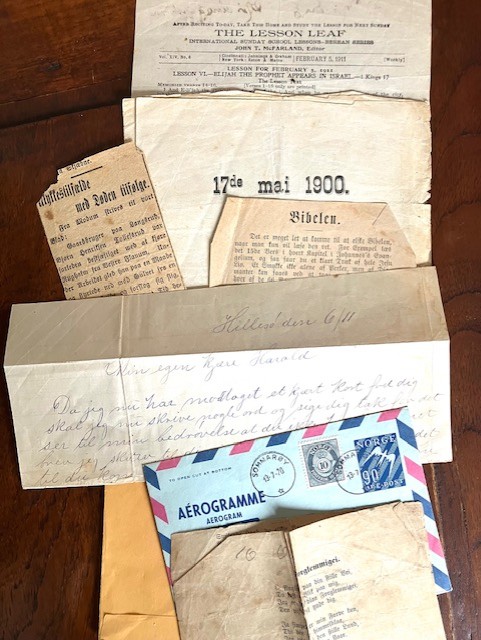
A year ago I contacted the Class of ‘62, asking whether anyone had any materials of my father. And C. immediately wrote back. While in Europe my cousin M. brought me an envelope with photocopies kindly provided by C. She and I spoke twice on the phone and she invited me to come see her.
So I did. I could see why C. and my father hit it off.
“I always thought they’d end up together,” Aunt J. said to me in Tacoma.
But after graduating high school things turned out quite differently. “You could have been my daughter,” C. looked at me and I looked at her, my almost mother as we said goodbye. I was thankful that I got to meet her and her family in person, as well as hear her stories about Parkland, Tacoma.
“I always thought your mother was about to explode,” a childhood friend told me. She wasn’t the only friend to tell me this.
C. did not seem at all like she was about to explode. Far from it.
The what ifs were in the air.

I nearly stopped at the Bigfoot Museum as I drove out of Redmond, Oregon. “I should really play that myth up a bit more,” I thought to myself as I reflected on the role of Big Foot in my fictional novel in blog form, now available as an audio book entitled Routine Apparitions, all about my father’s missing archival materials. Get more Northwest jabs in.
“You are going to put more of the pretendian-ism in there, right?” At my friends’ house in Seattle for dinner J. was talking about Routine Apparitions and the character of the Nixpert, the deliberately inept researcher.
I nodded. Yes, I was going to develop that aspect more at the end of the novel.
Upon arrival in Tacoma, fresh from Amsterdam, I stayed in an airbnb on Vickery Avenue not far from my grandmother’s brick house in an area that family members call “out in the country.” It actually is the countryside.
Driving past Hannah’s house again, I finally noticed something. Unlike most of the ranch houses with tidy and trimmed lawns visible from the road, Hannah’s house was removed, a wall of overgrowth between the road and the front yard. The house is 1930’s gothic/fairytale. It’s not a farm but a medium sized house on a large property in farm country.
The house is a benchmark for the Hansen family vibe – fronted by the mysterious, hidden, gloomy exterior. It speaks of the new middle-class playing at country estate without the overflow of cash and youthful staff and zip code networking de rigeur. Given the area, the vibe was not about rapid upward mobility in competition with the neighbors. For my grandparents it was also definitely not about let’s get some chickens in the yard to merge with the lower plebs, aka where they themselves as children of struggling immigrants used to be on the social ladder until their parents nickeled and dimed their way out of a shack in the woods, one pair more successful than the other.
To recap the reason for Vickery Ave: there weren’t any seedy bars nearby for my grandfather to frequent and his mother who loved to harass her daughter-in-law was benched – well outside walking distance.
A singular question unhappily presented itself, repeatedly, during my professional life as an opera singer: “Where is your inner child, Persephone?”
Those were vocal coaches and theater directors demanding the impossible of me. Inner child? In those instances they meant where was the fun, wondrous and playful little person who was safe and secure, to tap into the naive innocence of childhood. Of course, as a child I had my moments, flashing smiles and exhibiting a carefree attitude, but could that have generally been a front? Or not? Good question. Was I imitating my socially charismatic father who was my leading example on how to handle the home situation? Was I having a great time? Always possible. It wasn’t all gloom and doom, but at any given moment it could go wrong and I had eyes in the back of my head, watching for any clue that signalled weasel asap out of whatever is going down and duck for cover.
I admit I was looking a little weary, having navigated the fly-overs off of I-5 into downtown Portland, as I surveyed the Denny’s parking lot. When I pulled up the homeless, excuse me – the un-home-ed (translation: a phrase referencing the undermining of the citizens’ hard won earning potential by radical right wing capitalistic possibly foreign governments subsidized by international tax treaties OR leftist softies giving away handouts so nobody wanted to own property and take care of the neighborhood because everyone expected civic services to roll up in compact suvs and ask them how they were feeling) were sitting under the row of overgrown shrubs, much like determined merchants lined up with the intent of doing solid business with a parade of uninformed tourists let loose in a third world country. In any case it was clear, there was an agenda out there on the pavement.
On my way to Redmond, Oregon, I had arranged to have lunch with an old friend whom I hadn’t seen in thirty years. “Oh no,” she said to me as we sat down, “I took the train in. I never drive in Portland.”
By this time the un-home-ed had just been served a Meals on Wheels special and were now standing in the middle of the cement driveway in a, shall we say, fairly stable willow-tree-esq formation.
I said I needed to re-park the car where I could see it, and left the booth for a moment.
“There’s no milk,” the waitress said after I ordered a milkshake.
I had specifically tried to arrange a meeting outside of downtown to the west of Portland, but my friend insisted on meeting me downtown. Because she could take the train in.
The 55+ special came with a sausage the size of a Safeway baby carrot. No hashbrowns. “Isn’t there supposed to be hashbrowns with this?” I asked, looking at the plate. One fried egg, a mini sausage and a dixie cup of fruit. Back in 2024 the 55+special had been the perfect amount of food for me.
I looked at my friend. She hadn’t changed.
A plate of soggy hashbrowns arrived. “The cook forgot.”
In 2024 I was able to view the inside of Hannah’s house on Vickery Avenue because it was for sale, and this probably shaved off years of therapy. A young family has now moved in and that was nice to witness as I drove by. Times have moved on, and not only because that’s how the world works, but also in my mind and heart. Going inside the house in 2024 jump started my positive memories.
Waking up in the attic room of the Tacoma airbnb (very much like my old room at my grandmother Hannah’s house), I opened up the window and inhaled the air, enjoying that peculiar freshness of summer in Washington. The trees, the dew. All familiar. The sounds of the birds, trees moving and occasional passing traffic.
While living abroad I have spent a lot of time these past decades avoiding fellow American’s questions about missing America. I sense during my recent visits to Tacoma that I have come as close to acknowledging the presence of my contented inner child as I ever will.
And what was I going to do in Tacoma? Besides trying to produce normal conversations with the few remaining family members in the area, having during my last trip previously delved into the dysfunctionalism that came blasting out of the closet after my mother’s death and shocked everyone with its ugly power and undeniable madness, I suppose I had a fantasy of doing what my father’s mother, Grandma Gert, did to pass the days. Jigsaw puzzles laid out on the card table, local newspapers with little to no serious news like back in the 1970’s, maybe go to the supermarket and buy a pack of gum.

All those years ago while working as an opera singer all I ever wanted to hurl back at the vocal coaches and theater directors whenever they demanded Pollyanna to show up was a blunt, “Fuck the fuck off!”
So, take a deep breath and change the subject.
Specifically talking to a professional recently about what was possibly wrong with my mother (an antisocial personality disorder fits the bill per the DM5), I told her off my gut reaction to people harping on the inner child business.
“Then let’s not go there,” she said.
“That was crazy,” she said flatly to me after we went through just one of many episodes I’ve had to live through during the past five years since my mother’s death. She examined the documents provided to me by a media lawyer that I brought for proof that I was the one who was not unhinged. “You’ve had to fight all your life to survive.”
First step: leave America.
The day I checked out of the airbnb on Vickery, I toted my suitcase down the stairs. The airbnb smelled like Hannah’s house. And I realized, feeling just like a kid again, that I had never anticipated the day when I would not have been toting my suitcase down Hannah’s stairs, loading it into the station wagon and sitting next to her as she drove me to Union Station to catch the train back to the Bay Area with my father. It never was my intention to stop speaking to my grandmother or stop even talking about her for seventeen years.
Of course, as a responsible adult I couldn’t yell obscenities at any of those coaches and theater directors who were supposed to make me a better artiste and an adequate performer, aptly emoting and revealing a touching amount of vulnerability that the audience would relate to while watching an opera about an absurdly unrealistic situation.

And I had to be believable, yes, believable, and there’s the rub. The directors were seeking access to a commonplace reality that they expected to find somewhere within me, something which didn’t easily manifest.
A little more than an hour east of Portland, I took a break at Government Camp. I still had the jitters from driving through the grimy metropolis and a case of indigestion from the dining experience at the superbly urban Denny’s. After parking on the main drag to the ski resort, I stepped into the local museum and examined a corner of a sawed-off fire lookout set up as an educational scene.
Somewhat calmed down, I got back in the car and promptly drove into a bank of brown smoke rolling in on the winds passing over the forest fires. “Where the hell am I headed?” I thought, worried about the possibility of roads being closed due to fires. I had double-checked before I left Seattle. Admittedly, it was a bit of an adventure, showing up at my father’s high school girlfriend’s house upon her invitation. From her last email I got the idea that she was also feeling a bit uncertain about the whole idea now that it was really happening, a middle-aged stranger all the way from Amsterdam would show up on her doorstep.

Unfortunately after this trip to the states, upon returning to the Netherlands, I was going to have to interview for jobs. And I had nothing much to wear. Age, body shape changing etc. Blouses, I said to myself while in Tacoma, just buy loads of them. Blouses are tricky – either you are feeling them or not. One of the blouses I bought in 2024 at a Tacoma Goodwill was left hanging, unappreciated, in my closet until I decided I really liked it. Shortly thereafter I ruined it, snagging the front so the fabric was permanently puckered. Oh well.
What else, besides talking to family members about normalish things (what a relief) and visiting the Goodwill, was I going to do in Tacoma? I thought about visiting Mountain View Cemetery again. For months in 2025 I had been quite ill (turns out I was having a delayed stress reaction to what I call the Great Craptastic which was hands down an absolutely horrible experience that I would not wish upon anyone) and had been looking at what I wanted done with my body after death. My ashes will be interred in my grandmother’s grave, except the cemetery never collected the money after I filled in the forms. I could stop by and pay them, such a strange thought since these days I feel not at all close to dying, but maybe not – given the job situation.
“Maybe wait,” Aunt J. said, looking sideways at me from her chair.
“I kept asking my stepmom for part of my dad’s ashes,” my old friend said to me over the filthy table top at Denny’s in Portland after telling me about how hard it was to convince her brother to relinquish a quantity of their mother’s ashes. My friend was still angry, even though she had finally gotten her fair share of the cremated remains of her parents. “Took her long enough! Five years!” She indicated her continued irritation at her stepmom by blinking hard and shaking her head.
The idea of receiving a selection of my father’s ashes had never occurred to me.
“Paperweights,” my old friend said, announcing the end game.
Stop being so morose and show some joy! OR: “Why can’t you get angry?” a coach asked me once, thinking that I should show some backbone in some up tempo piece of tempestuous Brahms.
Because getting angry would put me in direct danger of complete annihilation, I learned this so young that I don’t even recall when I learned this.

“Two huckleberry!” B. made his request to the man behind the counter who then handed me a perfect scoop of ice cream in a cup.
“What’s a huckleberry?” I had asked Aunt J. Of course I knew of the word but couldn’t place the fruit.
“It’s like a small blueberry,” she replied.
“It’s funny, “ I said to B. while visiting Redmond. “My family says beef, not cow.”
“Cow is for dairy,” B. said. He grew up on a farm in Missouri and later married C. They retired to Oregon.
Ah yes, that would be it. I never understood the farm life where my father was raised and over which he hardly ever spoke.
“A steer is a castrated bull,” B. said to me, as he drove me his vintage Porsche around the desert plateau on a radiant day in Oregon, answering my question.
I got out of the silver Porsche and stood facing Smith’s Rock.
“Smith like Joseph Smith?” I asked.
“No idea,” B. said.

In Tacoma I bought three blouses at Goodwill because they suited my coloring. Now that my hair is grey I can’t wear the olive greens that favored my former red-blond complexion anymore. Frankly, I am always uneasy with clothes. I always think, who do I have to be in this blouse? What will people think of me? Do I really like it? After a shower, I put on a new second hand blouse. A pink blouse. I examined my reflection in the mirror.
Second step: slowly reconnect with family when it’s safe.
Concerned about my shabby wardrobe my grandmother Hannah used to buy me new clothes as a child and whenever I arrived, she’d promptly present them to me, “Do you like it?” She mainly bought me navy blue, purple or yellow colored clothes. Never pink.
These days I ask myself, “Do I like pink? Am I supposed to like pink? Am I allowed to like pink now?” You can begin to tell what kind of nonperson I was trained by my mother to be. Don’t show that you like anything without her approval first – because it could lead to a dangerous confrontation and all items taken away.

The first week, during which I had met a lot of people, had passed. I felt I needed a break. I opted to decompress a few nights in Chico where I knew no-one.
I remembered liking the foothills of the Sierra Nevada. Why do I remember this area? Somewhere when I was a teenager, I went with my mother on a day trip. Twice, maybe thrice. This time while on my little solo break, I thought I would drive around to the gold towns and take in the old sites. It wasn’t until the second day in Chico that I felt decidedly unhappy. But it has to be said: the area is stunningly beautiful – just look at those golden rolling hills.
Except for the faded charm of the goldrush era, downtown Oroville was mostly vacant. The feeling that dozens of people in hats had once routinely thronged to the downtown grid was now decidedly remote. Forty years ago you could positively conjure up the disappointed faces of the phantom folk who finally turned their backs on Oroville and left for good, abandoning the stores with high tinned ceilings and the empty barber chairs behind to gather dust.

Trying explain to C. my relationship with my father who was my main caregiver for my early years I ended up saying, “As a teenager I was monopolized by my mother.”
And there we have it, the typical tactic of a narcissist: isolation in a car and on a road trip to nowhere to see no-one. Captive audience, interrogation and so much more. As I drove myself around the back roads near Chico, I could vaguely remember the conversations that my mother and I had in the Ford Maverick, but mostly I recalled the routine of how the interactions were patterned. It didn’t matter anymore about the specifics because the years had blasted enough of her indoctrination out of my system. However, I was dismayed at this resurgence of the past, prompting a slight film of ick to the day.

Back in the 1970’s, in addition to clothes, Hannah also bought me vitamin pills, those crunchy Flintstone shaped vitamin pills for children.
I obviously had no interest in reintroducing children’s vitamins, punched into pastel cartoon characters, into my diet. But I poured myself a bowl of breakfast cereal. Cheerios – Fruity flavor. I can’t resist Cheerios when I am in the states. What else could I do that morning on Vickery Avenue in my airbnb? Why, I could watch an episode of the Munsters. Thinking about this possibility and looking out the window at the trees, I chomped on my Cheerios.
I rearranged the boxes of Trident Gum that I also couldn’t resist buying at the supermarket. Checking google, I saw that I was missing a few flavors. I might try the Dollar Store. Of course, the autistic person in me wants to collect all the tidy rectangular packages and take them home with me and slowly chew through them all winter as a souvenir of Tacoma days.
Okay, why not watch The Munsters? I selected an episode from YouTube. The theme song began. It was an uncanny feeling. Then the laugh track. “Where’s grandpa?” Herman asks. The trap door opens and out comes grandpa Munster. I begin to realize where my childhood brain was, my real grandfather was most likely inert in his chair next to me, deep his own basement vibe.
It took me an hour more than was necessary to get out of Chico, California. Culprit: avoid motorways activated in the app. Hence a big loop. The closer I came to the Bay Area, the more agitated I began to feel. Looking out the window over the grasslands in the valley as I waited for a pilot truck to lead cars over the uneven asphalt under road work, I tried to convince myself that what I liked about those trips back then with my mother was the landscape. But did I? Attention from a narcissist. It’s powerful and that’s why I am still looking for my father’s missing archival materials. He never left her.

“You showed him the way by leaving,” my doctor said to me in Amsterdam. She had a point. Keith kept in touch with his high school buddies, and I learned about this after his death. But did he return more often to the northwest after I reconnected with my grandmother? Or had he been visiting the area on his own all those years? Probably the latter.

Back in the 70’s you had to check the newspaper for the tv program or, like Hannah did, buy the TV Guide. How many hours did I spend pouring over the TV Guide? You can guess. Like my grandfather, I learned to read at three years old. We had that in common. He didn’t enjoy watching The Munsters, but he wouldn’t move from his lounge chair, having initiated the day with a few drinks before lunch. As far as I was concerned, being with Grandpa was pretty tame compared to life with my parents. Case in point, he never banned me from watching television, rarely moved and I left him in peace. We both had a bargain.
Third step: remember.
Clear Lake, just north of the Bay Area. There was that time that I had a friend whose normalish family invited me on a camping trip to Clear Lake. I was nine years old. Later they gave me a photo of me looking morose, blinded by the sun, in front of the lake as a souvenir. I have never appreciated camping. Remembering the greens and blues of the image in my mind of the photo, the actual photo long lost, I drove around Clear Lake and down the blond hills towards Petaluma to visit a second cousin who lives in a large Victorian house. In 2023 my second cousin and I finally got better acquainted.
On the final leg of my trip I stayed the weekend with my dear childhood friend. In the evenings we watched a four part documentary on the Burning Man Festival.
“Aw, hell no,” my friend yelled at the screen, her fork in midair and her salad bowl cupped in her other hand.
“You couldn’t pay me enough to go there,” her partner said.
We three are all the same age and, because we had all survived dysfunctional childhoods, we have the exact same reaction to the kind of community that favors the Burning Man Festival. We certainly didn’t need to revisit the scene in person, and watching the antics on screen from the safety of the couch was entertaining, not traumatic.
“Hmmm, Gerlach,” I read while observing the flight pattern on the screen in the airplane on my way back to Amsterdam. I looked out the window and instantly spotted the circular grid of The Black Rock City etched in the Nevada desert. Bingo.
Running errands in Oakland, we drove past the shabby California Hotel (a seedy hotel now “revamped” and officially providing low income housing). My friend instantly recalled sitting in a bar and overhearing one man say to his drinking partner, “The California Hotel, that’s where they steal your towels.”

“Let’s look at the old train station,” I suggested as we passed 16th Street. I had heard that the station had been closed permanently after the earthquake. Question: was it still standing? My friend u-turned and we rumbled down the potholed street towards the 16th Street Station. Outside a band was playing cover songs under the burning sun, and a refurbished Transit bus sat in the parking lot. We had stumbled into a West Oakland happening, and the train station was open to visitors (hard hats required) because local partnerships were campaigning to save the station for the community.

I have always vividly remembered how in the summers I used to go to the 16th Street Station with my father to catch the train to Tacoma. It was beautiful to stand on the platform again and recall those moments now so far away, when my father and I waited on the platform in the middle of the night for the train to pull in. It was sometimes a long wait because Amtrak was nearly always delayed. I recalled the majestic waiting hall and the benches that were hard to sit on, sliding around on the curvy seats, and the people and the piles of luggage and the anticipation of travelling on a train to see my grandmothers and the beauty of the old station, even then tattered but still magnificent. It’s now looking even worse for wear but it’s still standing.